About Us
Axicos Systems builds ARCOS™ — Asset Reliability & Cost Optimizing Simulator — a proprietary decision support technology platform for organizations that depend on physical assets to run their business. ARCOS was designed and developed by the founder of Axicos Systems.
ARCOS runs decisions through layered simulations across reliability, economics, risk and operations, executed through dedicated computing engines. This is where the name comes from: decision intelligence is derived through simulation, not asserted from a static formula.
Where traditional models treat cost as linear and treat each function's data in isolation, ARCOS models how a choice made in one part of the organization (Engineering, Operations, Maintenance, Supply Chain, Finance) changes outcomes in another, so leaders across those functions can compare decision paths on a common economic basis before committing to one.
Built on ARCOS. Designed for Decisions.
StatIntel™ · RotoIntel™ · RotoIntel™ GT-R1
StatIntel™, RotoIntel™ and RotoIntel™ GT-R1 are specialized decision-intelligence products built on the ARCOS™ Technology Platform. Each product applies the ARCOS architecture to a different class of high-value assets, connecting reliability, economics, risk and operational variables to generate actionable insights.
Designed for Engineering & Operations, Supply Chain & Finance, Management and business owners, these products enable users to explore alternative scenarios, understand their economic consequences and make more informed, defensible asset decisions.
Unlike conventional analytical tools that primarily provide data, calculations or dashboards, ARCOS-powered products incorporate a cognitive layer and a decision layer, connecting analytical relationships, interpreting their implications and presenting the consequences of alternative decision paths.
The result is not simply more analysis. It is decision intelligence.
Each product is available under license, so your organization can put ARCOS to work on your own assets.
If you'd like to see how StatIntel™, RotoIntel™ or RotoIntel™ GT-R1 could apply to your assets, get in touch for a walkthrough.
Our Founder's Story
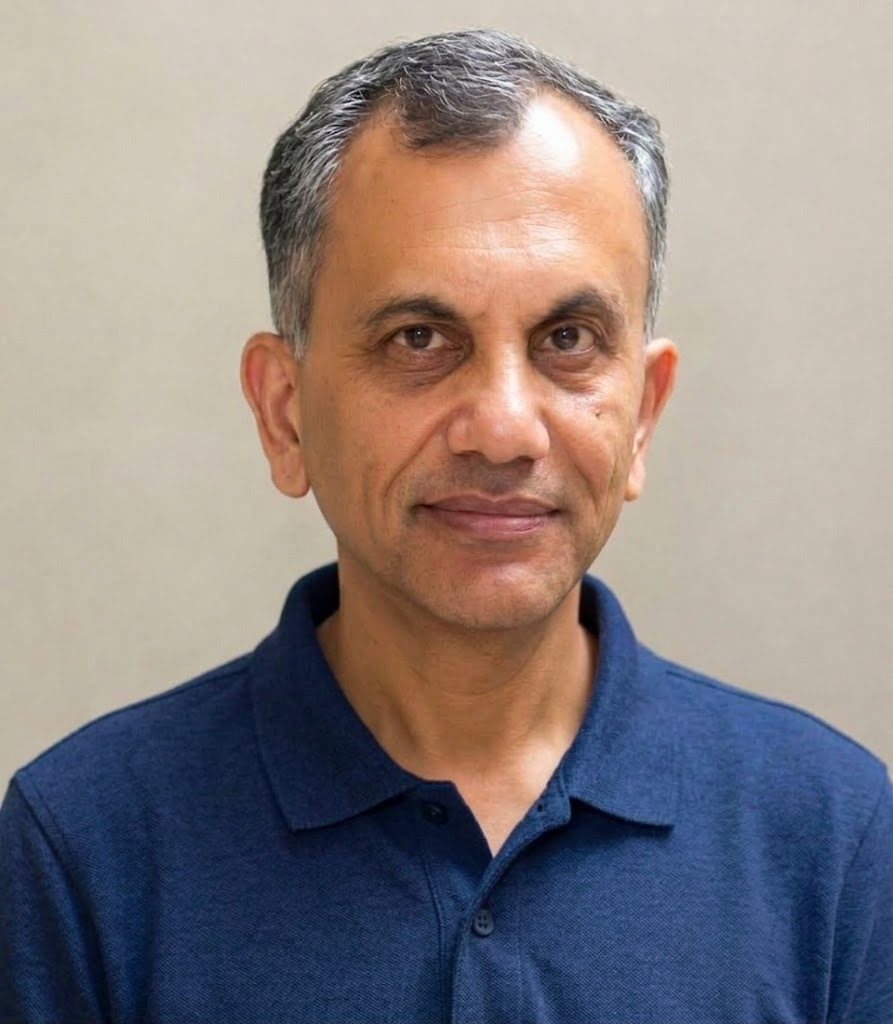
I am Bhargav, founder of Axicos Systems and creator of the technology platform - ARCOS™
After more than three decades working across asset-heavy industries and across multiple disciplines, I came to recognize a fundamental truth: the future of every asset-dependent organization ultimately depends on how well its assets return value.
Yet organizations rarely look at their assets as a whole.
Engineering, Operations, Maintenance, Supply Chain, Finance and Management each see the asset through a different lens. Their individual objectives and KPIs may be perfectly rational, even brilliant, within their own domains. But when these decisions interact, the overall outcome can be very different.
The problem initially appeared to me as fragmentation of data. Over time, I realized that something more fundamental was being lost: context.
Different functions often speak different professional languages. Information moves between them, but the relationships and circumstances that give that information meaning do not always move with it. The result can be decisions that are individually rational but collectively sub-optimal.
That realization led to a question:
What if we could restore that lost context and understand what an asset's future might look like under different decisions?
From TCO to Decision Intelligence
The journey began with Total Cost of Ownership.
I found traditional TCO inadequate for the reality it was supposed to represent. It is generally linear, deterministic and largely indifferent to the relationships between the variables within its cost buckets. Reality does not behave that way.
The variables that shape an asset's future are connected. A change in one can influence another, which can influence another, creating a chain of consequences that ultimately changes the economics of the asset.
This led me to explore failure probability, downtime economics, maintenance optimization, replacement decisions, uncertainty and Monte Carlo simulation. Scenario analysis followed naturally.
The objective was never to reproduce reality. It was to identify the major variables at play, understand how they relate to one another, and model the sequence through which those relationships influence future behaviour and economic outcomes.
Gradually, the individual pieces began to connect.
And something emerged.
The Emergence of ARCOS
ARCOS™, Asset Reliability & Cost Optimizing Simulator, was born from that emergence.
It is called a simulator because of how it works: it is by running an asset's future through layers of simulation, across reliability, economics, risk and operations, that ARCOS derives decision intelligence, rather than by applying a static formula to a single outcome.
ARCOS is not simply a collection of analytical tools. It is an architecture in which reliability, economics, risk and operational intelligence interact to simulate alternative decision paths and their consequences.
It does not prescribe an answer simply because an outcome has been designated as desirable.
Instead, ARCOS asks a different question:
What is likely to happen if we choose this path rather than that one, and what will it mean economically?
By modelling those relationships and projecting their consequences, ARCOS seeks to restore the context that becomes fragmented across organizational boundaries.
The result is decision intelligence: greater clarity about the choices available, the risks involved, and the economic consequences that may unfold over time.
More Than a Technology Platform
The ambition behind ARCOS™ extends beyond building a suite of industrial software products.
I believe organizations can make significantly better decisions when they learn to connect knowledge that is usually examined separately, and understand the relationships between the parts rather than optimizing each part in isolation.
ARCOS is my attempt to turn that belief into something practical.
Its architecture is built on an emergent principle:
When reliability, economics, risk and operational intelligence converge in the right way, the resulting decision intelligence can be greater than the sum of its individual analytical components.
That is the idea behind ARCOS.
And ultimately, that is the change I hope it can help create:
organizations that understand the power of decision intelligence and learn to use it to create the
magic of a whole that is greater than the sum of its parts.
If this way of thinking about your assets resonates with you, I'd welcome the conversation.
BHARGAV KHAUND
FOUNDER